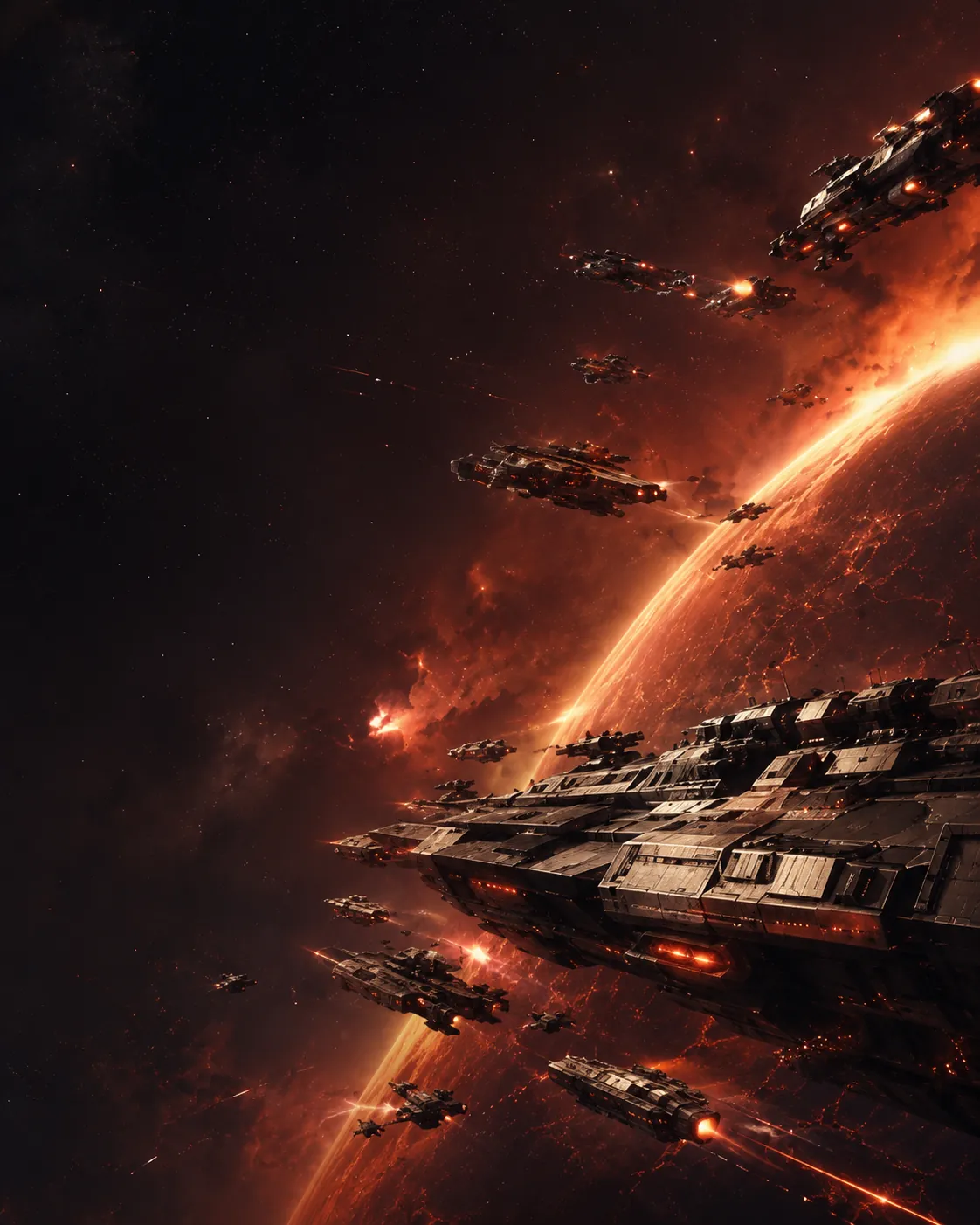
Planets in Xterium vary by type, and their type depends on their orbit—the closer to the star, the hotter they are. Temperature directly affects resource extraction: energy is easier to generate on hot planets, deuterium is easier to collect on cold ones, and Earth-like planets offer a balance between the two.
Here, all types are grouped by temperature: hot (scorching, volcanic, desert, arid), moderate (rocky, oceanic, terrestrial), cold (swampy, toxic, tundra, frozen, icy), and moons—natural (formed from debris after battles) and artificial (created by a collider).
All planets have the same range of building slots (200–270). Open the planet's profile to view its temperature, orbits, and features.
A moon is a special body above a planet with its own buildings. It appears from battle debris or is built in the Planetarium — and it can be destroyed.
Creation
After a big battle, debris can form a moon — the more debris, the higher the chance, up to 20%. You can also build one in the Planetarium for 10,000 dark matter, 500,000 metal and 200,000 crystal — and the "Create moon" artifact makes it free.
Destruction
A moon is destroyed by a Death Star fleet. The bigger the moon, the lower the chance — for a moon near 10,000 km it drops to almost zero. The attacking fleet also risks self-destruction, and a Lunar Base and Collider lower the destruction chance.
Hot Planets
· 4Moderate Planets
· 3Cold Planets
· 5Moons
· 2Summary table of all planets
| Name | Group | Effect |
|---|---|---|
| Scorched (Magma) Planet | Hot Planets | The planet closest to the star (1st orbit), around +225…+275°. The sun beats down hard, so energy is easy to produce, but deuterium is hard to collect. |
| Volcanic Planet | Hot Planets | A very hot planet in orbits 1–2 (+150…+275°). The high temperature makes energy production easier. |
| Desert Planet | Hot Planets | A warm planet in orbits 2–3 (+75…+225°). The climate leans towards energy. |
| Arid Planet | Hot Planets | A dry, warm planet in orbits 2–3 (+75…+225°). The climate favours energy production. |
| Rocky Planet | Moderate Planets | A planet in orbits 3–4 (0…+150°). A moderate temperature, a balance between energy and deuterium. |
| Oceanic Planet | Moderate Planets | A planet in orbits 4–5 (−75…+75°). A comfortable temperature — a balance of energy and deuterium. |
| Earth-like Planet | Moderate Planets | A planet at a moderate distance from its star (orbits 4–5, −75…+75°). The temperature suits both deuterium collection and energy production. |
| Swamp Planet | Cold Planets | A cool planet in orbits 5–6 (−150…0°). The low temperature helps to collect deuterium. |
| Toxic Planet | Cold Planets | A cold planet in orbits 6–7 (−225…−75°). The cold makes deuterium easier to extract. |
| Tundra Planet | Cold Planets | A cold planet in orbits 6–7 (−225…−75°). The low temperature helps with deuterium extraction. |
| Frozen Planet | Cold Planets | A very cold planet in orbits 7–8 (−275…−150°). The severe cold makes collecting deuterium noticeably easier. |
| Ice Planet | Cold Planets | The planet farthest from its star (8th orbit, −275…−225°). The temperature never rises above 0°, so deuterium is the easiest of all to collect. |
| Natural Moon | Moons | A natural satellite of a planet. It can appear after large battles above the planet — a moon forms out of the debris. Unlocks lunar buildings. |
| Artificial Moon | Moons | An artificial moon built in the Planetarium for resources (dark matter, metal, crystal). It gives the same lunar options as a natural moon, but is created deliberately. |